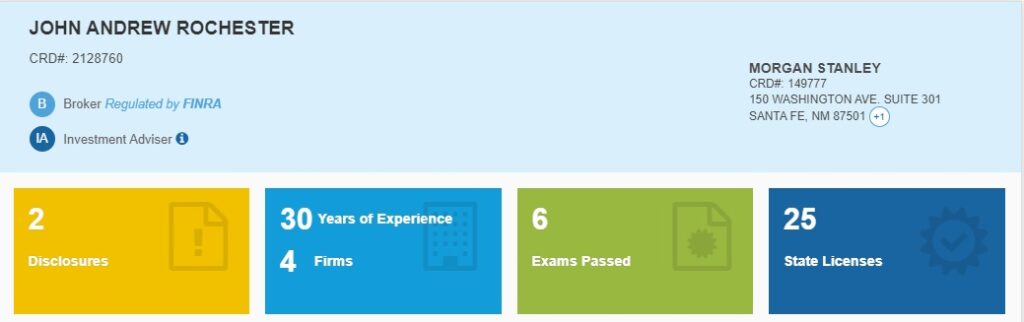
The Leaders Group, Inc. and Verity Asset Management have both counted Raymond Adam Menna as a registered broker working with their investor clients. But recent disclosures on his FINRA BrokerCheck (CRD #1918097) highlight important allegations and regulatory actions that all current and future investors should be aware of. If you have ever invested with Raymond Adam Menna, or are considering doing so, understanding his record is a wise move.
Summary: Raymond Adam Menna’s Broker Profile
| Field | Details |
|---|---|
| Name | Raymond Adam Menna |
| CRD Number | 1918097 |
| Current Firms | The Leaders Group, Inc.; Verity Asset Management |
| Past Firms | Verity Investments, Inc.; Planmember Securities Corporation |
| Exams Passed | SIE, Series 7, Series 6, Series 24, Series 63, Series 66 |
| Regulatory Actions | 2 (Massachusetts Securities Division 2021; FINRA 2018) |
| Customer Disputes | 2 (2026 – paperwork alteration; 2017 – unauthorized trading, settled $260k) |
| Key Allegation | Alleged alteration of account paperwork, claimed damages of $20,328.80 (2026) |
Recent Allegations Against Raymond Adam Menna
When trust in a financial advisor is shaken, it’s often due to actions that compromise client interests. In June 2026, a client accused Raymond Adam Menna of altering paperwork linked to her new brokerage account, claiming this led to overcharges and seeking $20,328.80 in damages.
- The affiliated firm denied responsibility for the loss. However, Raymond Adam Menna acknowledged in his own BrokerCheck comment that alteration did occur in the documents. The firm ultimately reduced its fees as a goodwill gesture, a move often reflecting a desire to resolve underlying concerns outside of formal liability.
This is noteworthy. Financial institutions may issue fee reductions when there is reason to improve client relations, even if they deny liability on paper.
Additionally, in November 2017, another client dispute arose, involving allegations of unauthorized trading, unsuitable investments, misrepresentation, and material omissions. The customer sought $1 million in damages—a significant claim. The dispute was ultimately settled for $260,000, with Raymond Adam Menna personally contributing $35,000 to the resolution (FINRA docket 17-02977). Though Menna denied wrongdoing, substantial settlements often point to meaningful client impact.

“An investment in knowledge pays the best interest.” — Benjamin Franklin
This advice is timeless: knowing your advisor’s regulatory and client complaint history is one of the smartest research steps an investor can take.
Regulatory Actions and Supervisor Interventions
The background of Raymond Adam Menna is extensive, but not without concerns. Here are the two major regulatory disclosures currently on record:
- August 22, 2018 – FINRA Action: Menna was fined $5,000 and suspended for 45 days after admitting he improperly shared in a client’s losses (paying approximately $15,000 out-of-pocket) without the required written approvals from his employing firm or customer. Additionally, he provided inaccurate responses on internal compliance questionnaires, a breach that undermines firm supervision and regulatory trust.
- January 14, 2021 – Massachusetts Securities Division: The state securities regulator imposed a final order placing Menna under three years of heightened supervision. This included mandatory pre-approval for all securities sales to Massachusetts residents and quarterly compliance certifications, after finding material concerns connected to the previous FINRA action.
Regulatory actions as severe as heightened state supervision are not common and signal a strong regulatory interest in ongoing oversight.
Understanding the Relevant Rules: FINRA and Regulation Best Interest
Several important rules and standards apply to the conduct of brokers like Raymond Adam Menna:
- FINRA Rule 2150 prohibits improper use of a customer’s funds or securities. This specifically includes sharing in customer profits or losses without required approvals.
- FINRA Rule 2010 requires all member firms and brokers to uphold high standards of commercial honor and just and equitable trade principles in the conduct of their business. Falsifying forms or providing misleading information runs directly afoul of this rule.
- Regulation Best Interest (Reg BI), implemented by the SEC in 2020, now obligates brokers to make recommendations that are in the best interests of retail clients, requiring full transparency about fees, risks, and conflicts of interest.
Altering client paperwork or failing to properly disclose fees and account terms can trigger breaches of each of these rules. Overcharges as a result of altered documents contradict a broker’s duty of care and loyalty to the client.
Risks of Investment Fraud and Poor Advice
According to Investopedia, investment fraud—including unauthorized trades, misrepresentation, or charging unjustified fees—costs investors millions each year. Broker misconduct may not be limited to clear criminal fraud; “bad advice” or non-disclosure of risks can have equally damaging effects on an investor’s financial well-being. The nationally recognized database of financial advisor complaints notes that even a single regulatory disclosure increases the probability of future investor complaints. Regulatory data published by FINRA supports this point, underscoring the value of checking every advisor’s history before making investment decisions.

Red flags to watch include:
- Multiple regulatory actions on an advisor’s record
- More than one customer dispute or substantial settlement
- Any patterns involving unauthorized account changes or paperwork discrepancies
- Lack of transparent communication about risks and fees
Key Lessons for Investors: Raymond Adam Menna’s Disclosures
The cumulative facts about Raymond Adam Menna—and the actions taken by both securities regulators and his employing firms—underscore the need for vigilance:
- Always check your advisor’s regulatory and complaint history via BrokerCheck. It is a free, reliable record of any disciplinary and customer complaint activity.
- Carefully review all your account opening paperwork. Question anything that you did not discuss or approve, and keep copies of all documents for your records.
- Remember that a firm’s denial of liability does not always mean the complaint was unfounded. In Raymond Adam Menna’s case, the company still reduced fees—a sign that something merited attention.
- Look for patterns. Multiple client disputes or regulatory actions are material warning signs and could suggest ongoing supervision or suitability concerns.
- Settlement dollars matter. A $260,000 payout tied to client allegations is serious, whether or not the advisor admits liability.
As an investor, your money and your financial future merit thorough protection. When working with any advisor—especially one with multiple regulatory disclosures like Raymond Adam Menna—be proactive. Review your paperwork, monitor account activity, and do not hesitate
Correction or Updated Info Needed? The information in this article includes the publisher's opinion and is based on publicly available materials believed to be accurate at the time of publication.
We welcome updates. If you have personal knowledge of additional facts or details related to any issues or individuals, and you believe that information would enhance the accuracy of the article, don't hesitate to get in touch with us https://financialadvisorcomplaints.com/article-correction-update/ and provide you name, address, email, and telephone contact for follow-up reporting, along with the back-up for any updates. The publisher strives to provide the most up-to-date and most accurate report regarding all issues and events, and welcomes input from any individuals with personal knowledge.
DISCLAIMER: The information herein is derived from public sources and is provided "as is" without warranty of any kind. Legal matters may have subsequent developments, and market values may fluctuate. While we strive for accuracy, we make no representations about the completeness or reliability of this information. Readers should independently verify all content and seek professional advice as needed.